


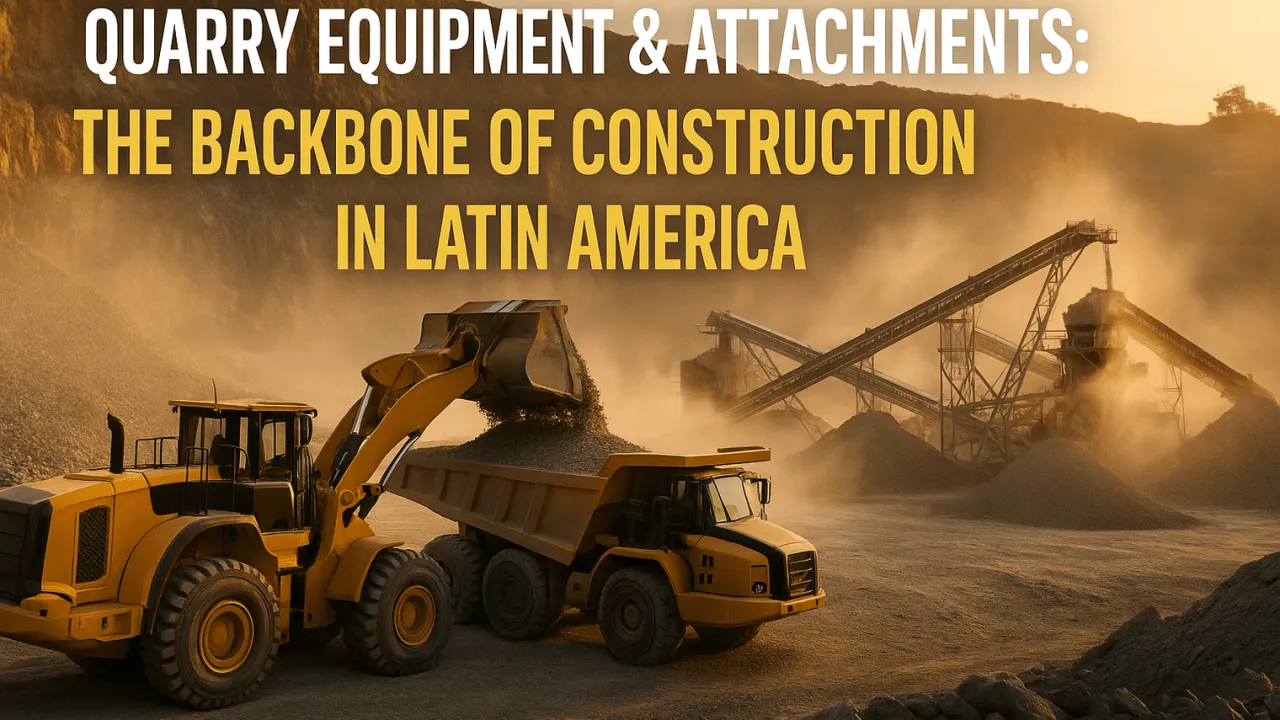
Quarries are the lifeblood of the construction and infrastructure sector, producing the essential raw materials that power roads, bridges, housing developments, ports, and industrial projects.
In Latin America, the demand for quarry materials such as crushed stone, gravel, and sand is closely tied to the region’s economic growth. As governments and private developers invest in large-scale infrastructure, quarry operators face constant pressure to deliver higher volumes, meet tighter deadlines, and maintain consistent quality.
What is Aggregate?
These raw materials are collectively known as aggregate, a mixture of sand, gravel, crushed stone, and other granular materials used in construction.
Aggregate is the base material for:
- Concrete
- Asphalt
- Roadbeds
- Foundations
Without aggregate, modern construction would not be possible. It forms the structural backbone of nearly every building and infrastructure project.
Why Equipment & Attachments Matter
For many operators, the difference between meeting demand and falling behind comes down to one factor, having the right equipment and attachments.
Examples include:
- Wheel Loaders – transporting aggregate across the site
- Hydraulic Hammers – breaking down oversized boulders
- Jaw Crushers – processing raw stone into usable sizes
The right machinery determines efficiency, safety, and profitability in quarry operations.
What Exactly Is a Quarry? A quarry is an open-pit mine specifically used to extract construction aggregates and dimension stone. Unlike metal mining operations, quarries focus on materials like limestone, granite, basalt, and sand, substances that are processed for direct use in construction or as base material for manufacturing products like cement and asphalt.
The production process typically follows four main stages:
- Extraction – Removing raw stone or aggregate from the earth, often with the help of drilling, blasting, or hydraulic breaking.
- Processing – Crushing, screening, and sorting materials to meet specific size and quality requirements.
- Transport – Moving the material within the site and preparing it for delivery.
- Distribution – Delivering the product to end users such as contractors, ready-mix concrete plants, or government road projects.
The Role of Quarries in Latin America’s Growth
Latin America’s quarry sector is driven by both domestic and international demand. Urbanization is reshaping major cities, roads are being expanded to connect rural and industrial areas, and ports are undergoing modernization to support trade. Each of these projects relies heavily on quarry products.
Key drivers include:
- Public Infrastructure Projects – Funded by government budgets and multilateral development banks, these projects require massive and steady supplies of aggregates.
- Private Development – Housing, shopping centers, and industrial parks all require large volumes of stone and sand.
- Export Opportunities – In some countries, high-quality stone is quarried for export to regions where natural supply is limited.
For quarry owners, this growing demand is both an opportunity and a challenge. Success depends on producing at high capacity while keeping operational costs and downtime under control.
Why U.S.-Sourced Equipment Has an Edge
For Latin American quarry operators, sourcing machinery and attachments from the United States offers distinct advantages:
Reliability and Durability U.S.-manufactured equipment from brands like Caterpillar, Komatsu, Volvo, and John Deere is designed to withstand extreme working conditions. This means longer operational life and less downtime, which directly impacts profitability.
Access to Original and Aftermarket Parts Parts availability from U.S. suppliers is faster and more reliable than sourcing from many local markets. This ensures that repairs are completed quickly, keeping machines in operation.
High-Standard Inspections Equipment purchased from reputable U.S. channels can be inspected by certified operators before export, ensuring buyers receive machinery in ready-to-work condition.
Common Challenges for Quarry Operators
Operating a quarry in Latin America involves more than just having heavy machinery on-site. Quarry owners face challenges such as:
- Harsh Operating Environments – Constant exposure to dust, vibration, and impact accelerates wear on equipment.
- Regulatory Compliance – Safety and environmental regulations vary by country and can affect production timelines.
- Logistical Complexities – Transporting large machinery to remote quarry sites requires specialized planning.
- Downtime Risks – Even a few days of halted production can result in significant financial loss.
Understanding these challenges is critical when deciding on which equipment to purchase or upgrade.
The Connection Between Equipment Choice and Profitability
The equipment a quarry uses isn’t just a cost; it’s a profit driver. Here’s why:
- Faster Production – Modern machines process more material per hour, enabling operators to meet growing demand.
- Lower Maintenance Costs – Equipment built for quarry environments resists wear and tear longer.
- Higher Safety Standards – Machines designed with advanced operator safety features reduce accidents and downtime.
- Attachment Versatility – The ability to swap attachments like hammers, crushers, or screening buckets lets operators maximize each machine’s usefulness.
Quarry Equipment as a Competitive Advantage
In competitive markets, the quarry with the most efficient equipment setup can deliver faster, more consistent orders, winning repeat contracts and long-term customers. This is where partnerships with trusted U.S. suppliers and aftermarket makers become critical. By combining quality equipment with expert sourcing and logistics, an operator can position themselves as the most reliable material provider in their region.
Strategic Solver
We connect Latin American quarry operators and construction firms with U.S.-inspected, high-quality equipment, attachments, and export solutions — ensuring every project runs efficiently on time, and at full capacity.
#HeavyEquipmentAttachments #HydraulicHammers #ScreeningBuckets #CrushingEquipment #RockCrushers #ExcavatorAttachments
