


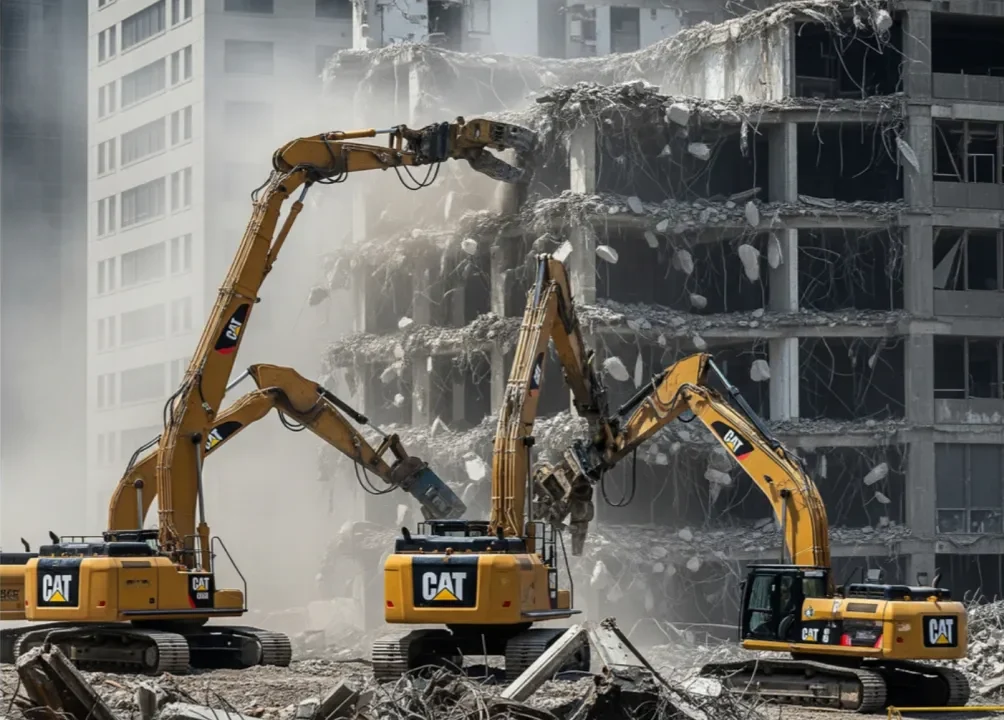
Demolition is the first chapter of every new build. Before foundations are poured or roads are laid, old structures must be removed safely, quickly, and cleanly. Across Latin America, investment in housing, logistics hubs, ports, energy, and city-center renewal is accelerating — putting demolition crews under pressure to meet tight timelines, strict regulations, and rising recycling targets.
What Is Demolition?
Demolition is the controlled dismantling of structures, including homes, bridges, factories, and port assets, so materials can be removed or recycled and the site prepared for new construction. It ranges from interior strip-outs to high-reach structural takedowns and post-demo grading.
What Are “Recovered Materials”?
Unlike quarries (which produce aggregate), demolition recovers materials already embedded in buildings and infrastructure. Typical outputs include:
- Recycled Concrete Aggregate (RCA) for road base and backfill
- Ferrous and non-ferrous metals such as rebar, beams, and conduits for resale
- Reusables like brick, timber, and fixtures where local markets exist
- Residuals destined for licensed disposal
Recovered materials lower disposal costs and can create new revenue streams that improve job margins.
Why Equipment & Attachments Matter
The difference between staying on schedule and slipping into costly delays often comes down to one thing: the right tool on the stick. Attachments turn one carrier into a multi-purpose machine and keep utilization high.
Examples include:
- Hydraulic Breakers (Hammers) — breaking slabs, footings, rock
- Concrete Pulverizers/Processors — crushing concrete and freeing rebar
- Steel Shears (with rotation) — cutting beams, tanks, heavy plate
- Sorting/Demo Grapples — precise picking, sorting, loading
- Magnets — fast steel cleanup, higher scrap value
- Dust Suppression Cannons — silica control for compliance and neighbors
- Hydraulic Quick Couplers — safe 2–3 minute tool swaps instead of an hour
The Demolition Process (Four Stages)
- Pre-Survey & Permits — utilities located and isolated; hazardous materials identified; method statements and exclusion zones set
- Selective Demolition — interiors and MEP removed to reduce hazards and contamination
- Structural Demolition — breakers, pulverizers, shears (or high-reach) dismantle frames and slabs in a controlled sequence
- Processing & Load-Out — pulverize concrete, shear and sort steel, magnet ferrous, then load to the correct streams (RCA, scrap, landfill)
The Role of Demolition in Latin America’s Growth
Demolition underpins:
- Urban renewal and infill — clearing obsolete stock for higher-use projects
- Industrial decommissioning — energy transition, plant upgrades, and closures
- Transport upgrades — bridges, terminals, port modernization
- Resilience and recovery — post-disaster teardown and rebuild
Demand is driven by public programs (often MDB-funded), private development, and a growing circular-economy push to recycle concrete and metals rather than bury them.
Why U.S.-Sourced Equipment Has an Edge
- Reliability and durability — tools designed for heavy cycles and harsh dust/vibration
- Parts availability — faster pipelines for wear parts and seal kits, reducing downtime
- Safety features and inspections — anti-blank-fire breakers, 360° rotation on processors/shears, pre-shipment flow/pressure tests, and documented inspections that arrive ready to work
Common Challenges for Demo Contractors
- Tight urban sites — limited swing space, traffic control, night work
- Dust/noise/vibration limits — city rules can cut runtime without proper suppression
- Waste segregation — meeting recycling targets with clean, sorted streams
- Utility surprises and hazards — unmarked lines or asbestos halting work
- Downtime risk — a single failed attachment can stall the entire job
The Connection Between Equipment Choice and Profitability
Choosing the right attachment package isn’t a cost — it’s a profit lever:
- Faster production — processors and shears out-pace torches and manual breakup
- Lower haul/disposal — on-site processing shrinks volume and increases recycle rates
- Higher safety — modern features reduce incidents and unplanned stoppages
- Attachment versatility — quick swaps prevent idle time and keep crews productive
Demolition Equipment as a Competitive Advantage
Contractors who pair optimized attachments with disciplined sorting and dust control deliver cleaner sites, fewer complaints, and reliable schedules. That earns repeat business and premium rates — especially when supported by trustworthy U.S. suppliers and aftermarket brands such as breakers, processors, shears, grapples, magnets, and quick couplers.
Strategic Solver We connect Latin American demolition contractors and construction firms with U.S.-inspected, high-quality equipment, attachments, and export solutions — so every project runs safely, on time, and at full productivity.
